
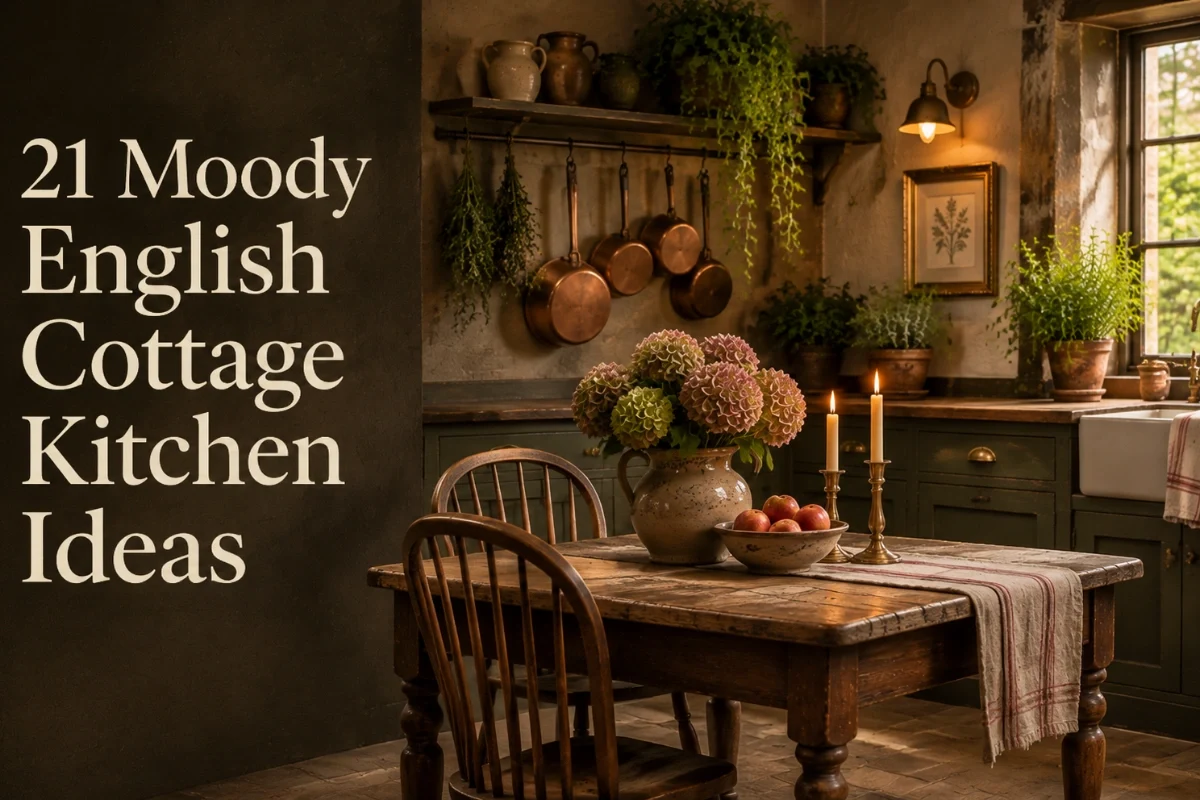
A beautiful English cottage kitchen rarely looks as though it was decorated in a single weekend. It feels gathered over time: a slightly worn farmhouse table, a cupboard filled with favourite plates, a brass tap that catches the afternoon light. Add deeper colours and soft evening lighting, and that familiar cottage charm becomes wonderfully moody.
These moody English cottage kitchen ideas are about more than dark paint. They show how to balance olive green, burgundy, charcoal and aged wood with practical storage, welcoming seating and materials that can handle everyday cooking. Whether you’re planning a full renovation or simply want to refresh one corner, the 21 ideas below offer achievable ways to bring a little countryside character home.
Deep Olive Green English Cottage Cabinets
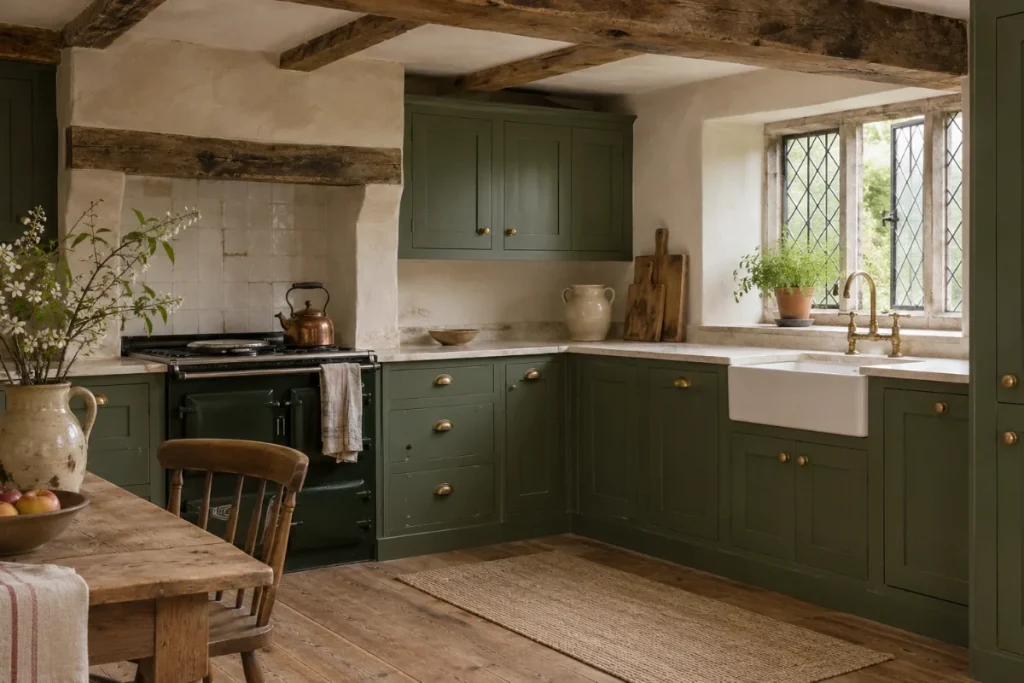
Deep olive cabinetry is a lovely starting point when you want a kitchen that feels rooted in the countryside rather than newly decorated. The muted green has enough depth to look dramatic, but it still works beautifully with wood, stone and soft natural light. In the photograph, the traditional range, pale worktops and leaded window stop the green from feeling heavy. For a similar effect, choose a low-sheen paint and pair it with warm white walls instead of stark white. If the room is narrow, paint just the lower cabinets olive and keep the upper wall open. Aged brass cup pulls add character without introducing another strong colour. Before committing, paint a sample board and check it beside the window at different times of day; olive can look considerably darker after sunset.
Dark Oak Cabinets With Antique Character
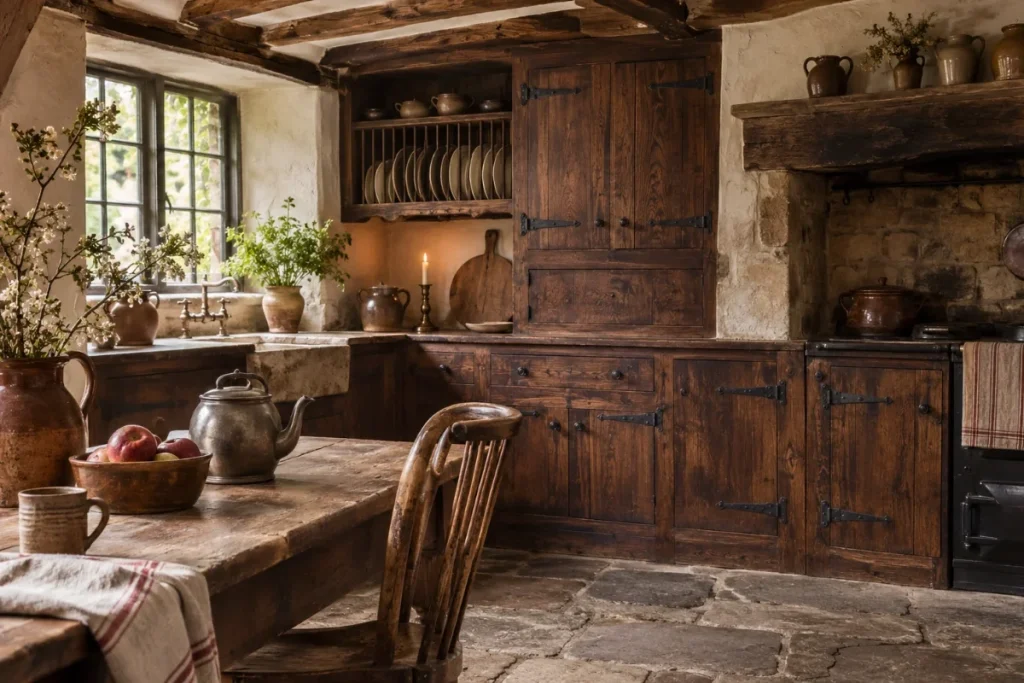
Dark oak brings a different sort of moodiness: the texture comes from the wood itself, not just a paint colour. The grain, visible joints and traditional iron hinges in this kitchen make the cabinetry feel like furniture collected over time. To recreate that warmth, combine a few dark timber fronts with pale plaster and an uncomplicated stone floor. Avoid staining every surface the same shade; a lighter worktop and a worn dining table create useful contrast. If solid oak cabinets are outside your budget, a vintage wooden cupboard can give you a similar focal point for much less. Keep the finish matte or softly waxed so it doesn’t look overly polished. This idea is particularly good for people who love antique interiors but still want practical, closed kitchen storage.
Moody Botanical Wallpaper for Vintage Charm
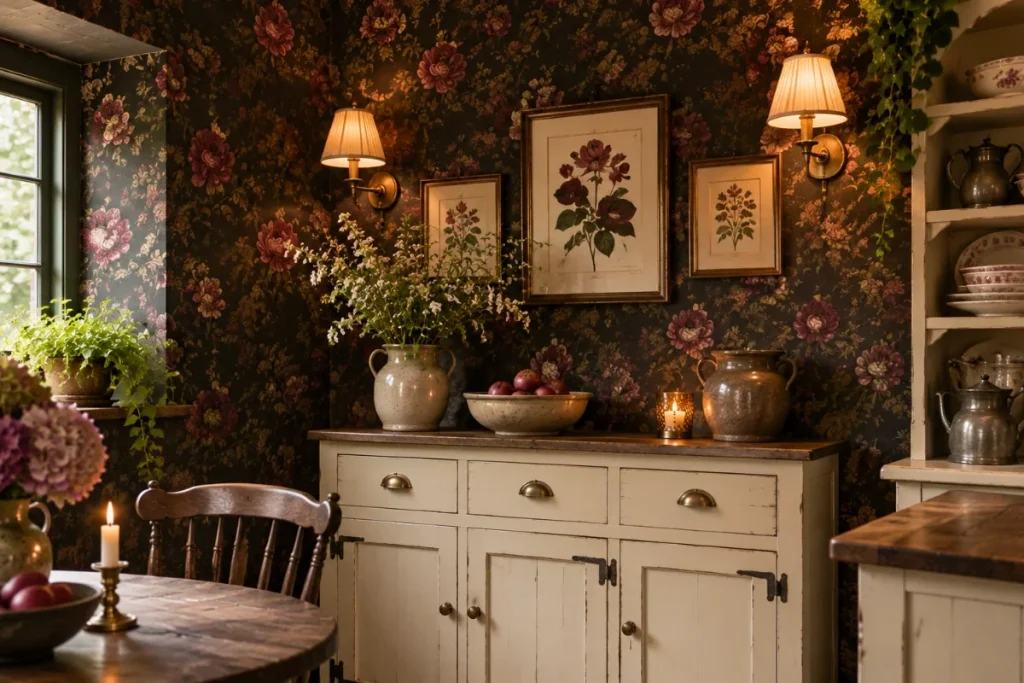
A dark floral wallpaper can make even a simple kitchen corner feel like a room in an old English house. Here, dusty pink flowers against a deep background are balanced by a worn cream dresser, botanical prints and warm wall lamps. The trick is to let the wallpaper be the main pattern. Keep nearby cabinets and larger furniture relatively quiet, then repeat one of the floral colours in a vase or linen. In a working kitchen, use a washable wallpaper suitable for the location and keep it away from direct splashes and high-heat areas unless the product is rated for that use. You don’t need to cover every wall: one breakfast-area wall or dresser alcove is often enough. The result feels layered and romantic without overwhelming the space.
Exposed Wooden Beams and Rustic Ceilings
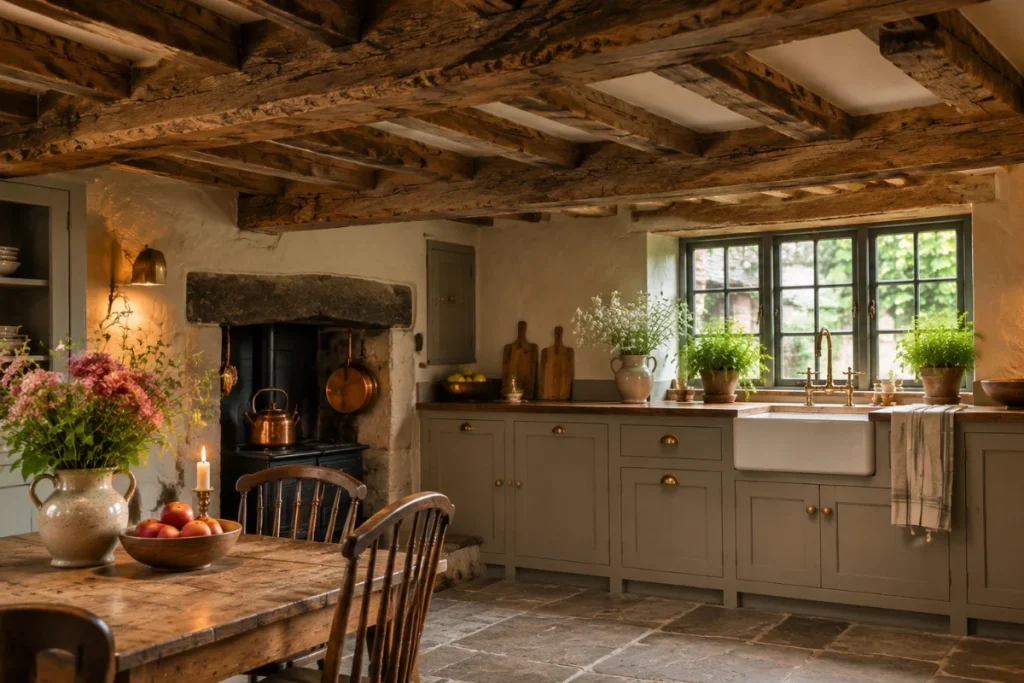
Exposed beams instantly add age and structure to an English cottage kitchen. In this room, rough timber crosses the ceiling while quiet neutral cabinetry and flagstone flooring let the architecture take centre stage. If your home already has original beams, gentle cleaning and a finish appropriate to the timber may be all they need. In a newer home, decorative beams can create a similar rhythm, but their size must suit the ceiling height; oversized additions can make a low room feel cramped. Keep ceiling paint light to reflect daylight between the timbers. A small brass wall light and a few copper pieces echo the beams’ warmth without making the space feel busy. Never alter structural beams without professional advice.
An Antique Farmhouse Table as the Heart of the Kitchen
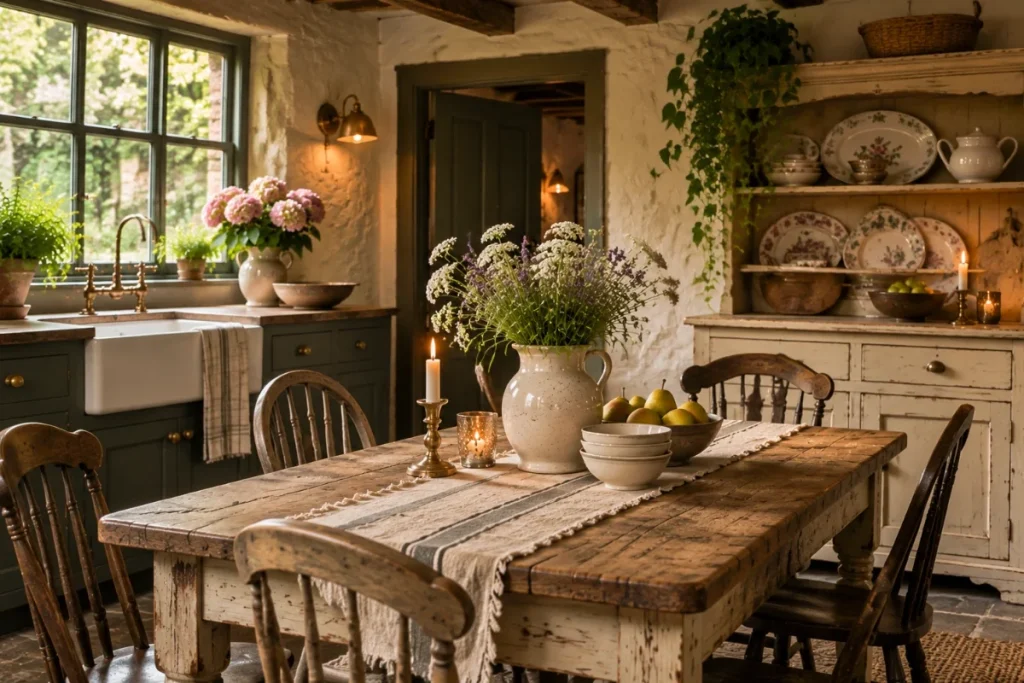
An old farmhouse table gives a cottage kitchen somewhere to gather, work and linger over tea. The table in this image has a visibly worn top, simple turned legs and mismatched chairs, which make the room feel relaxed rather than staged. Look for a solid second-hand table with a stable frame and a finish you can clean easily. A linen runner, everyday ceramic bowls and seasonal flowers are enough decoration; leave plenty of clear surface for real meals. If your kitchen is small, a narrow refectory-style table or a drop-leaf design can provide the same feeling without blocking the walkway. Mixing chair styles works best when they share a similar wood tone or height. A few scratches are part of the charm, but wobbly legs are worth fixing.
Aged Copper Pots and Traditional Cookware
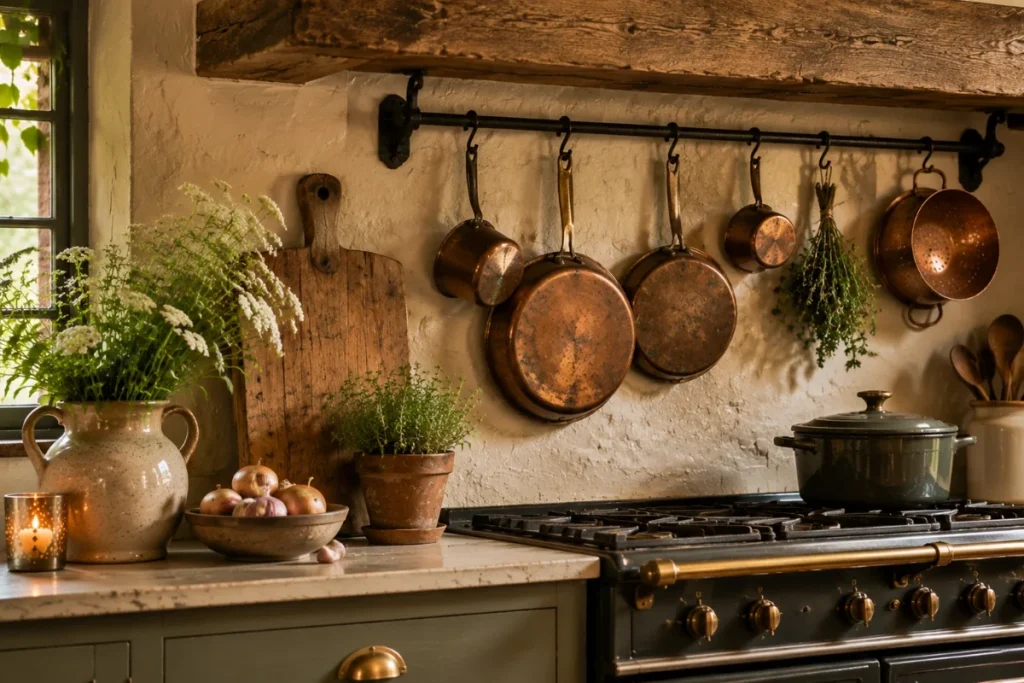
Copper cookware looks especially beautiful against rough plaster and dark painted cabinets. Instead of displaying brand-new matching pans, this kitchen uses pieces with varied patina and size, creating a lived-in cooking wall. A sturdy rail makes frequently used utensils easy to reach, while the warm metal adds colour without relying on bright accessories. If you plan to hang pans, use suitable wall fixings and leave safe clearance from the cooker and flames. Decorative vintage copper isn’t always food-safe, so check the lining and condition before cooking with it. You can start with just two or three pieces rather than filling the entire wall. Pair copper with wooden chopping boards and stoneware to keep the arrangement grounded and unmistakably cottage-inspired.
Freestanding Antique Kitchen Dressers
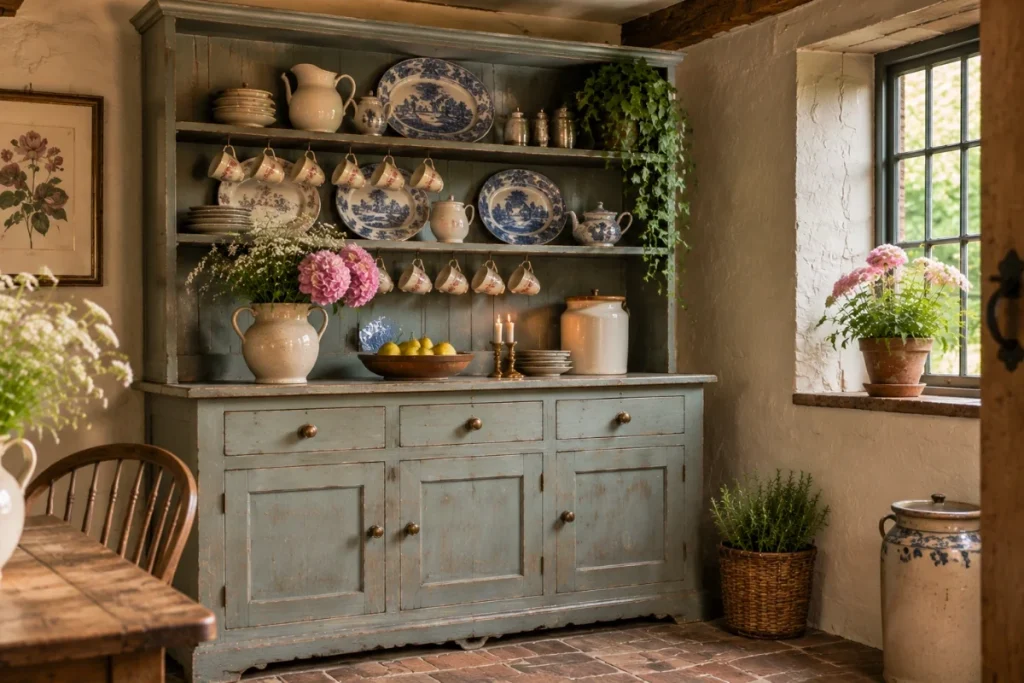
A freestanding dresser is one of the easiest ways to bring traditional English character into a kitchen without replacing fitted cabinets. This faded blue example displays plates, teacups and old pottery above useful closed storage. The gentle wear on its painted edges makes it feel collected rather than newly bought. Choose a dresser that fits your wall without crowding doors or walkways, and anchor tall furniture securely where needed. For styling, group plates by colour and leave a little breathing room between objects; too many small pieces can look cluttered. The bottom cupboards are ideal for table linens or occasional serving dishes. If you find a solid but unattractive second-hand dresser, a muted paint colour and simple knobs can transform it into a cottage focal point.
A Classic Belfast Sink With Vintage Taps
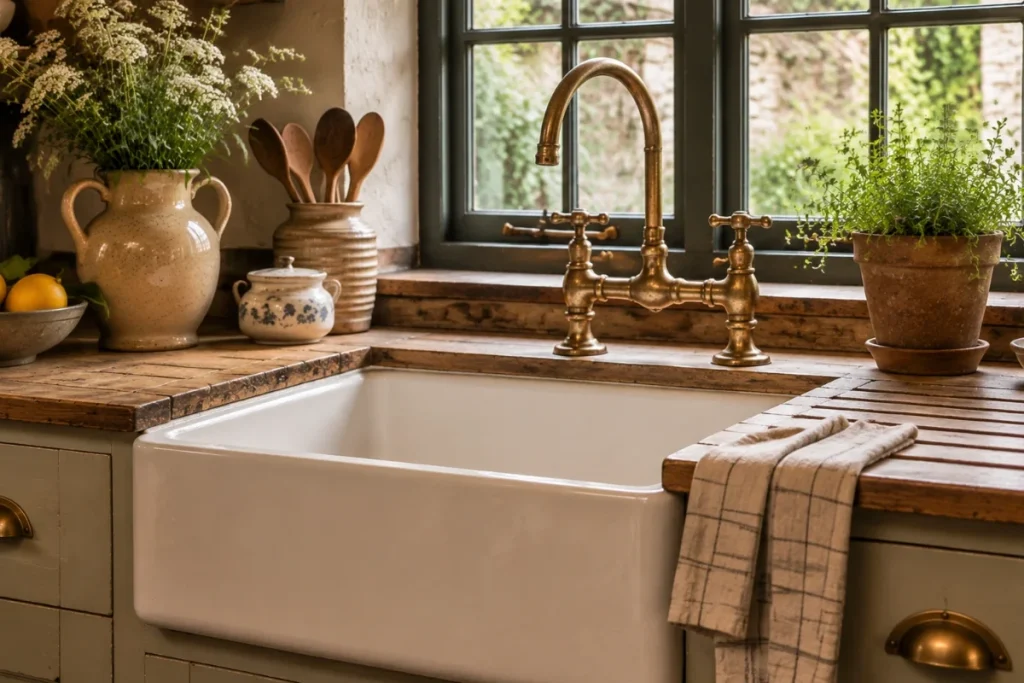
A deep white Belfast sink brings an unmistakable traditional touch to the kitchen. The exposed ceramic front contrasts beautifully with the worn wooden counter and aged brass bridge tap shown here. It also offers generous space for washing large pans, although the exact size and installation requirements vary. If you’re planning a renovation, confirm the cabinet support, plumbing layout and worktop details with your installer before buying. Timber around a sink needs an appropriate water-resistant finish and regular care, so stone or another durable surface may be easier for busy households. A checked tea towel and a pot of herbs are enough to complete the look. Choose the tap for comfortable everyday use, not just its vintage appearance.
Rich Burgundy Cabinets for a Romantic Look
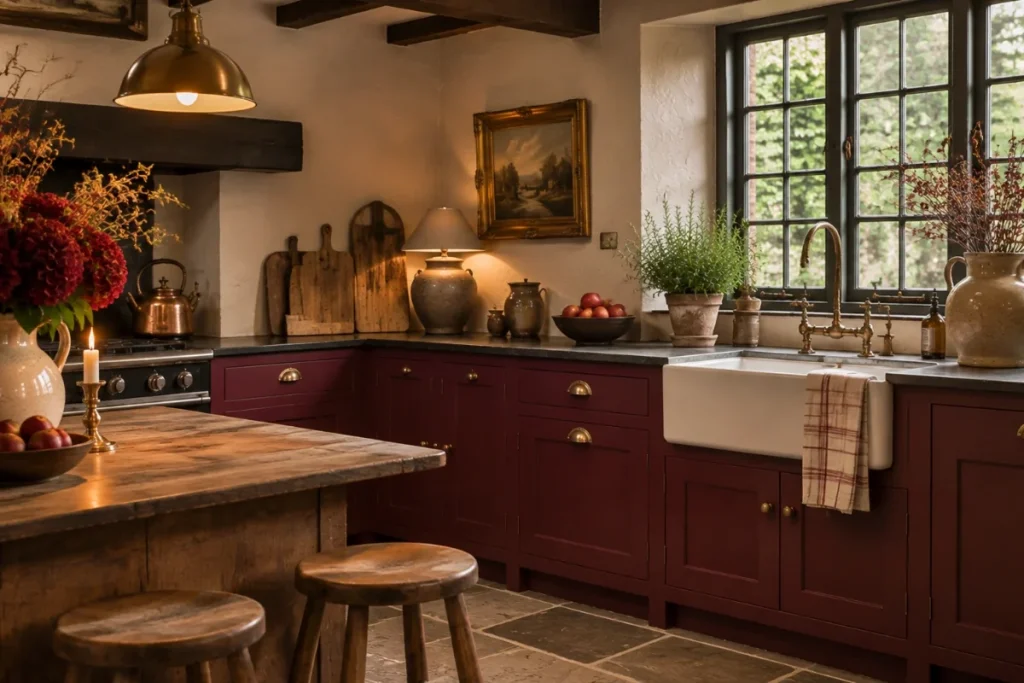
If green isn’t your favourite, burgundy is a wonderful alternative for a moody cottage kitchen. The wine-red cabinets in this room look rich beside the natural wood table, warm plaster and cream Belfast sink. Burgundy works best when the other finishes are earthy and restrained: think dark stone, aged brass, oak and linen rather than glossy white surfaces. In a small kitchen, use it on the lower cabinets or one freestanding island while keeping walls lighter. The shade changes dramatically with lighting, so test a large sample before painting. To make the space feel welcoming rather than formal, add a simple wooden stool, a bowl of fruit and everyday pottery. These softer details keep the dramatic colour grounded in country-house comfort.
Weathered Limestone and Flagstone Flooring
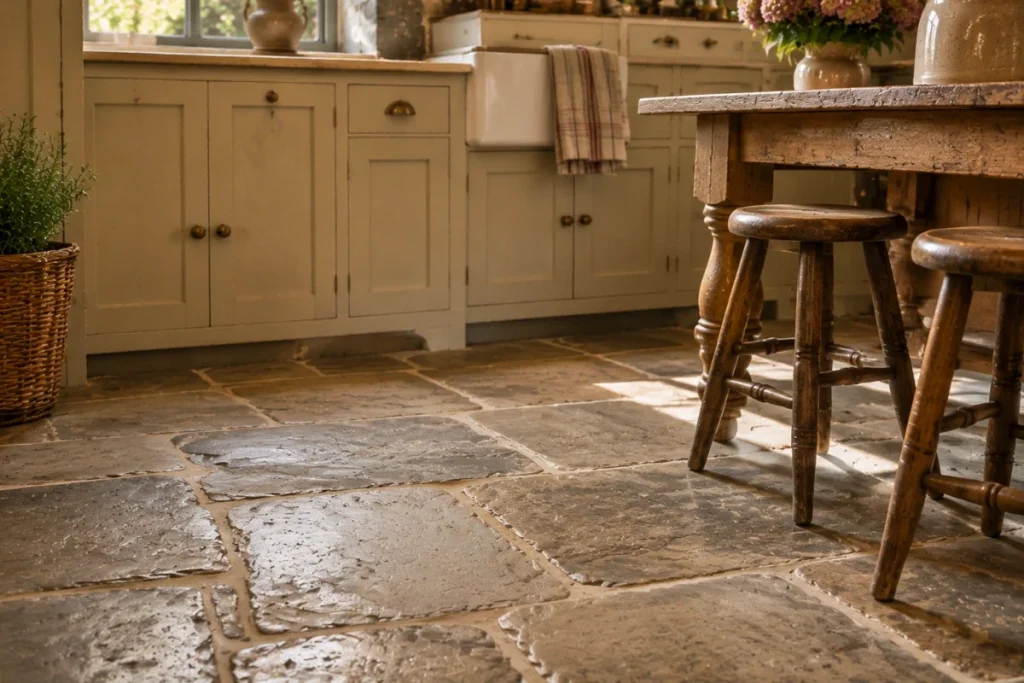
A flagstone floor gives an English cottage kitchen texture from the ground up. Notice how the uneven-looking limestone slabs and natural colour variation create interest without a busy pattern. They work especially well with painted cabinets, antique timber and simple plaster walls. If you’re choosing new stone, ask about slip resistance, sealing, cleaning products and suitability for your home’s subfloor. Real limestone is porous and can require more care than porcelain, so a stone-look tile may be a practical alternative in a high-traffic family kitchen. Use a washable runner where you stand for long periods, but don’t cover the whole floor; the texture is part of the design. Warm grout tones generally look more natural than bright white lines.
Warm Wall Sconces for a Soft Evening Glow
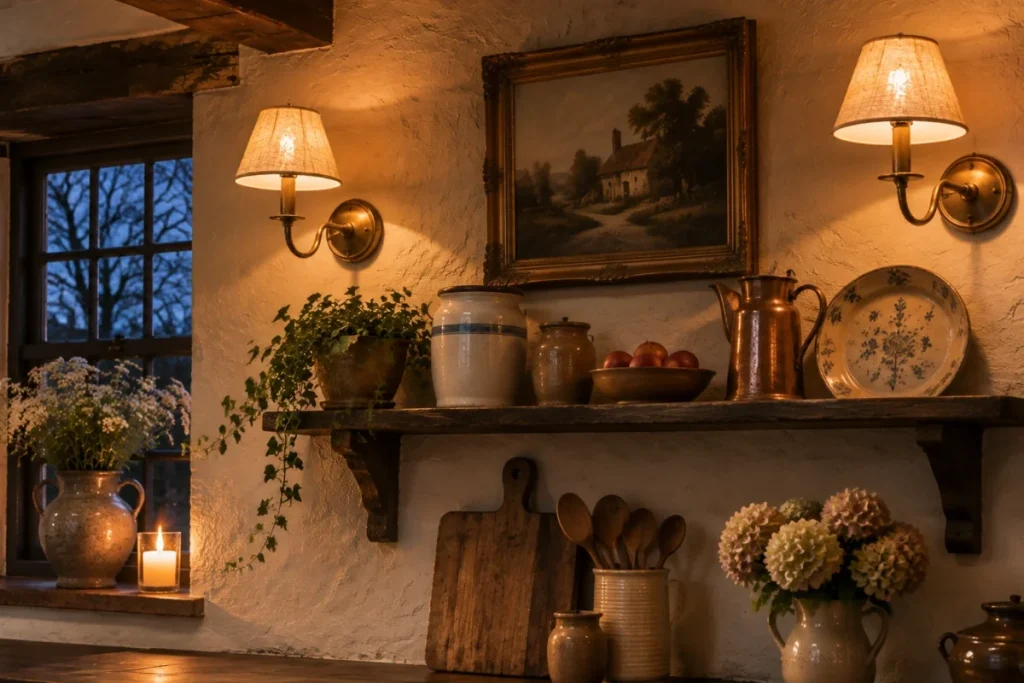
The most inviting cottage kitchens look beautiful after the sun goes down, and layered lighting is a big reason why. This scene uses two brass wall sconces to wash a textured plaster wall with a gentle glow, while pottery and a framed landscape add depth. Instead of relying on one bright ceiling fitting, combine task lighting for cooking with softer lights for dining and display areas. Warm-white bulbs usually suit wood, brass and cream finishes better than cool blue-white light. Put decorative sconces where they won’t interfere with cupboard doors or work surfaces, and have electrical work done by a qualified professional. A dimmer can help shift the room from busy weekday cooking to a relaxed evening atmosphere.
Open Shelving With Vintage Stoneware
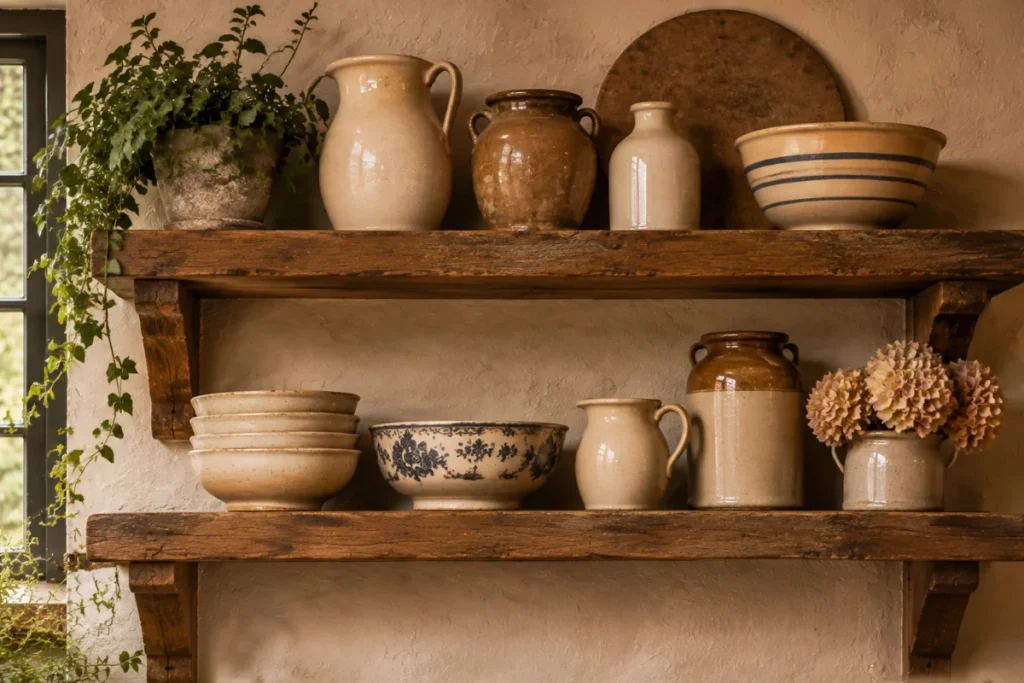
Open oak shelves make a small collection of everyday objects feel special. Here, mismatched stoneware jugs, bowls and jars share a simple palette of cream, tan and muted blue, so the shelves look curated without being precious. Choose shelves deep and strong enough for the items you plan to store, and fix them securely to the wall. Keep frequently used dishes at an easy height, and avoid placing delicate or dusty collections directly beside a greasy cooking area. For a balanced display, mix a few tall pieces with stacks of shallow bowls and leave open gaps. You don’t need antique pieces to get the look; handmade-style pottery from local markets can work just as well. The goal is useful storage that also feels personal.
A Traditional Range Cooker as a Focal Point
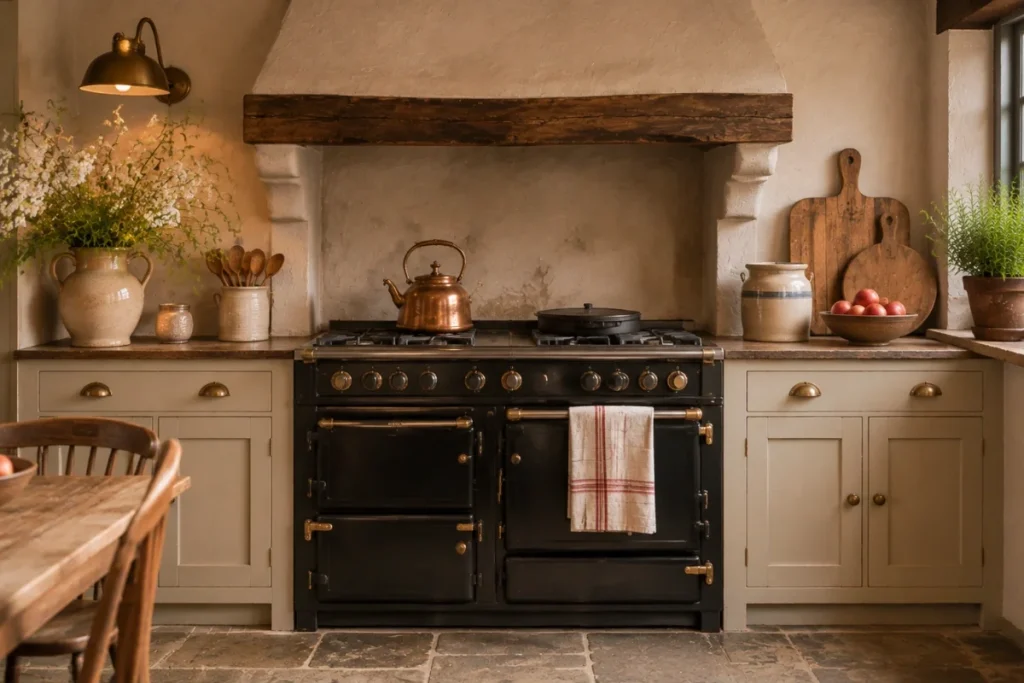
A substantial range cooker often becomes the visual heart of a country kitchen. The black cooker in this image sits beneath a plaster hood and weathered timber beam, with quiet cream cabinetry on either side. That simple symmetry makes the cooking area feel established and timeless. You don’t need an antique cooker to borrow the idea: a modern range-style appliance can deliver the same silhouette with features suited to your household. Check dimensions, ventilation, electrical or gas requirements and clearances before designing cabinetry around it. Keep nearby styling minimal so the cooker remains the focal point. A copper kettle, wooden utensils and a striped towel are plenty. The strongest cottage kitchens blend old-fashioned appearance with modern practicality and safety.
Leaded Glass Windows and Soft Floral Curtains
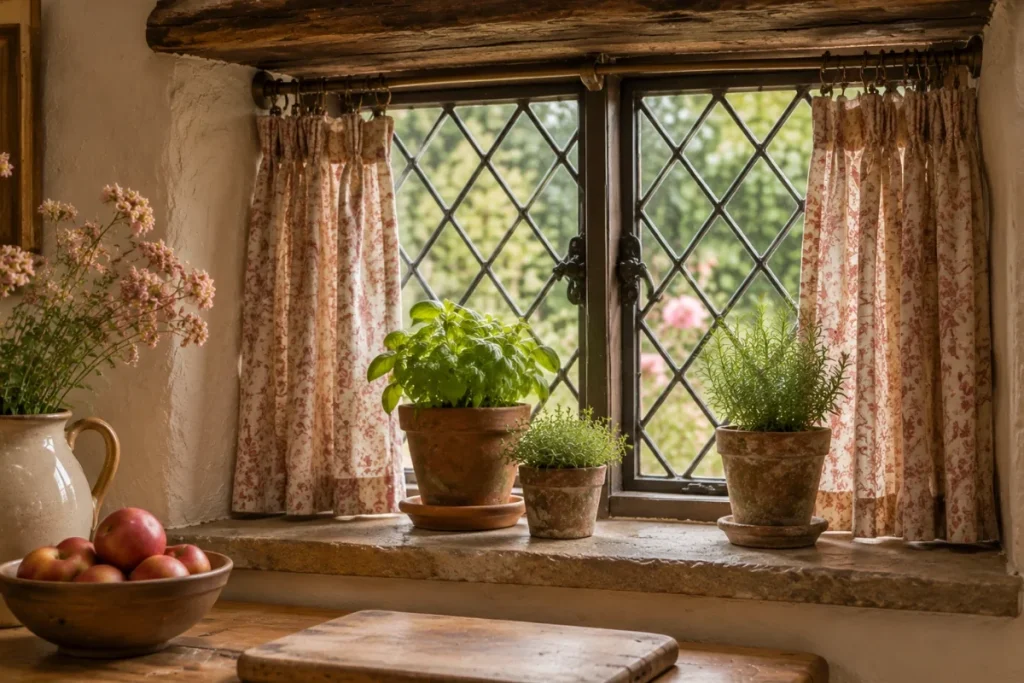
A small window can be one of the most charming features in a cottage kitchen. Diamond-pattern glazing, faded floral curtains and a few terracotta herb pots create a gentle connection to the garden. The key is keeping the window treatment light enough to let daylight through. Short café curtains are a good option for privacy while leaving the upper glass visible, especially in a breakfast corner. Choose washable fabric and position it away from open flames, hot appliances and splashing water. If you don’t have leaded glass, traditional timber window frames and a subtle floral fabric can create a similar mood. Match the curtain colour to one or two tones already used elsewhere, rather than adding a completely new palette.
Charcoal Cabinets Paired With Cream Walls
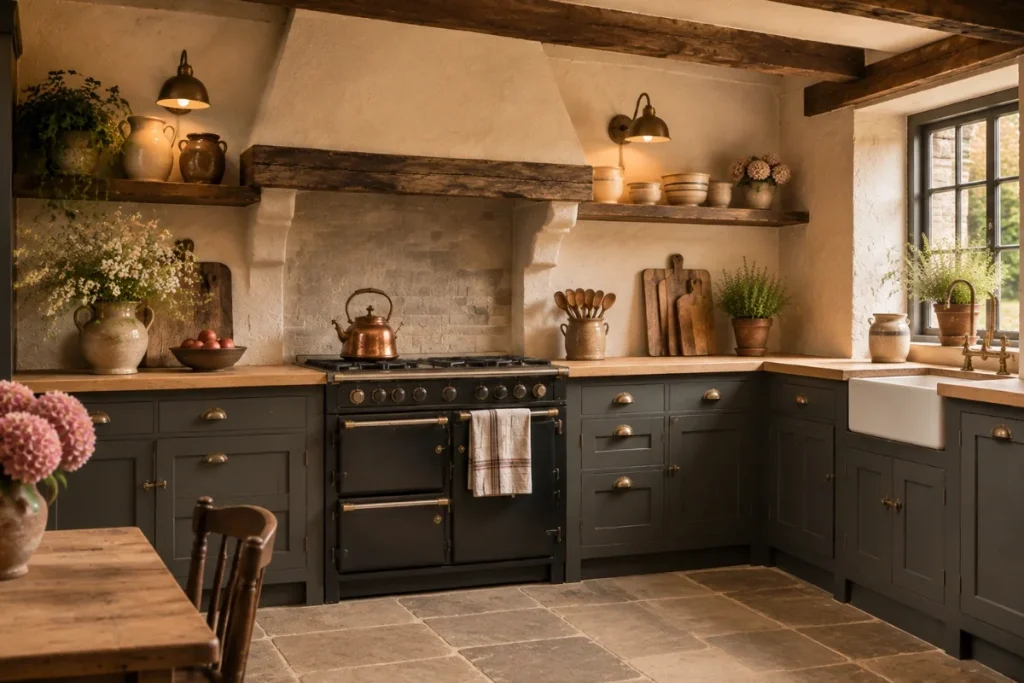
Charcoal cabinets are ideal if you want a dark kitchen without committing to green or red. In this wide view, matte grey cabinetry anchors the room while warm cream walls, stone flooring and timber beams keep it open and comfortable. The contrast is especially effective around the cooker and sink, where practical work zones need clear visibility. Choose a charcoal with a warm undertone rather than a stark blue-grey if your home has lots of honey-coloured wood. Brass hardware softens the palette, while pale countertops prevent the lower cabinets from feeling too heavy. In a kitchen with little daylight, try charcoal on the island or one wall of cabinets first. The best result feels calm and layered, not like every surface has been painted black.
A Cozy English Cottage Breakfast Nook
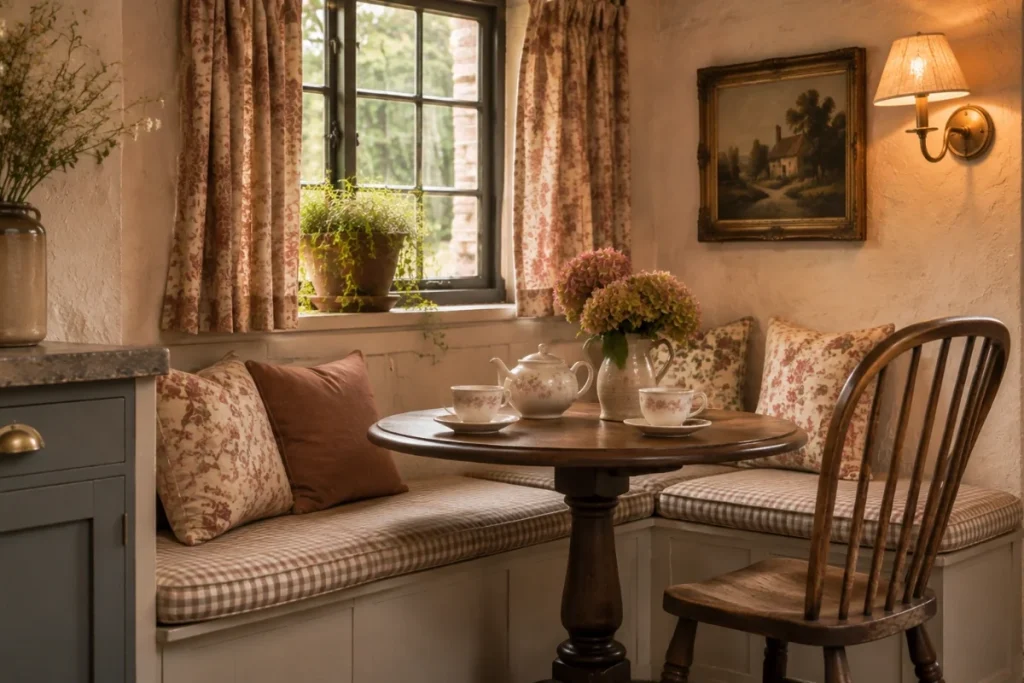
A breakfast nook can turn an awkward corner into the most-loved spot in the kitchen. This one uses a window-side bench, soft gingham cushions, a round wooden table and a simple tea set to create an intimate place for slow mornings. Built-in seating is useful where space is limited, but check that there’s enough room to pull out chairs and move around the table comfortably. Choose removable, washable cushion covers, especially if children use the space. A pedestal table can make getting in and out of a tight bench easier. Keep the decor modest: a small vase and a framed picture are more inviting than a crowded tabletop. Even a freestanding bench beneath a window can capture the same cottage feeling without major building work.
Antique Brass Handles and Cup Pulls
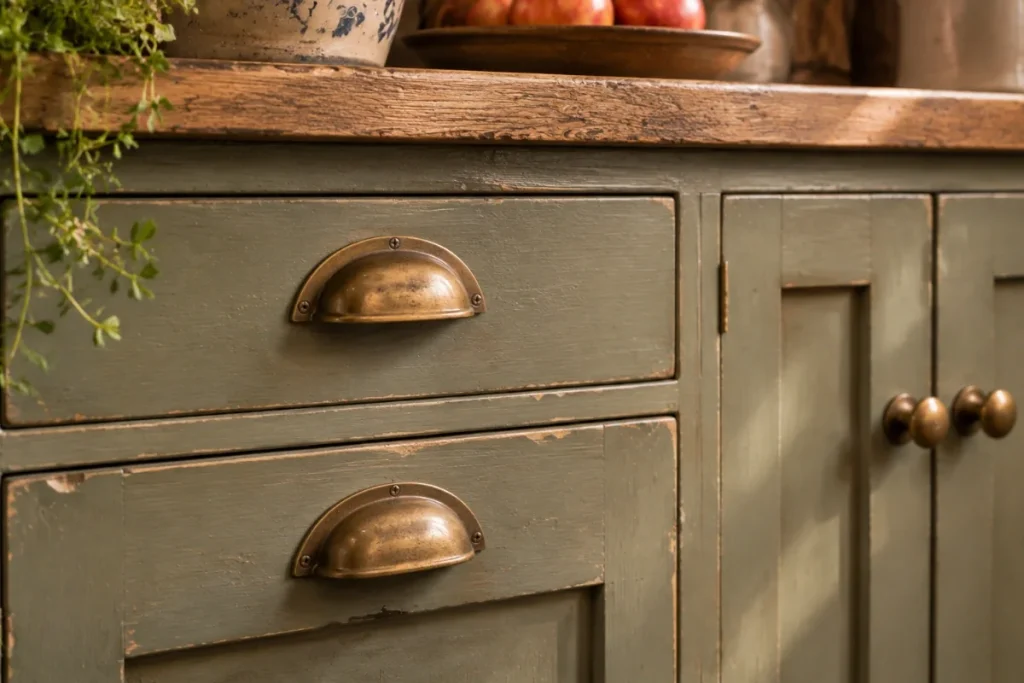
Small details can change the character of an entire kitchen, and cabinet hardware is a good example. These softly tarnished brass cup pulls look at home against the worn, muted paint of the drawers. Unlike bright polished fittings, aged brass feels quieter and more connected to traditional furniture. For a quick update, measure the existing hole spacing before ordering new pulls; choosing the same centres may save extra drilling and filling. Mix cup pulls on drawers with simple round knobs on doors for a classic look. You can use an aged finish throughout or allow genuine brass to develop its own patina over time. The important thing is consistency in scale and shape, not making every piece look perfectly new.
Hanging Herbs and Dried Flower Bundles
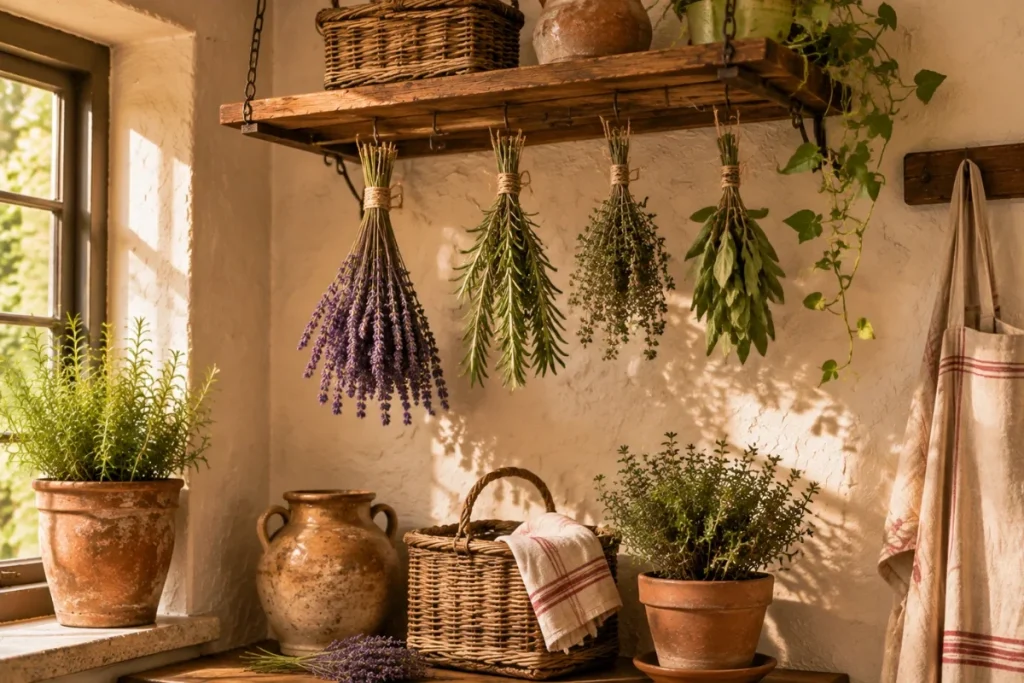
Bundles of herbs and dried flowers make a cottage kitchen feel connected to the garden. In this sunny corner, lavender, rosemary and other greenery hang beneath a rustic shelf, with terracotta pots and woven baskets below. Use small bunches rather than a huge display so the arrangement feels natural. If you’re drying herbs for cooking, follow food-safe drying and storage guidance; decorative bundles may collect dust and should not automatically be treated as edible. Keep dried plants away from the cooker, candles and other heat sources. A wall hook or short rail can work well in a bright corner, and a pot of fresh rosemary on the windowsill adds a living element. It’s an inexpensive way to bring seasonal texture into the room.
Blue-and-White Vintage Plate Displays
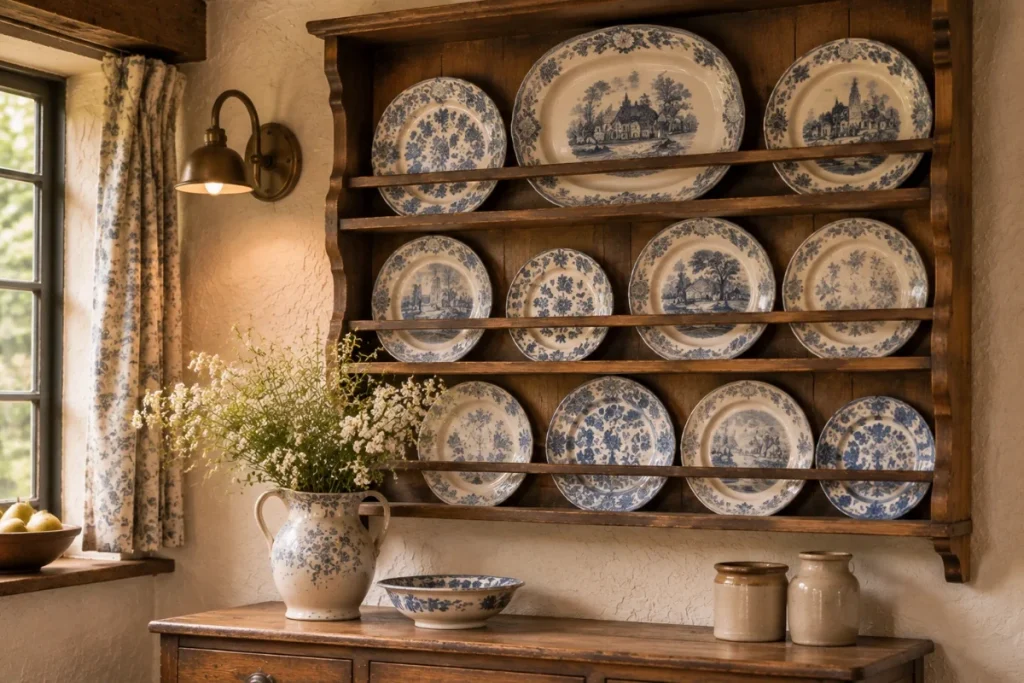
Blue-and-white plates are a timeless accent in an English cottage kitchen because they introduce pattern without demanding a whole new colour scheme. The wooden rack here turns a collection of transferware into a simple wall feature above an antique sideboard. For a similar display, start with a few plates that share a blue tone but vary in pattern and size. Secure the rack properly and make sure each plate is held safely in place. If you have a small kitchen, display only your favourite pieces and keep the rest in a cupboard. Pair the blue-and-white china with natural wood, cream pottery or a single jug of flowers. It adds a little formality while still feeling warm and approachable.
Natural Stone Backsplashes and Aged Plaster
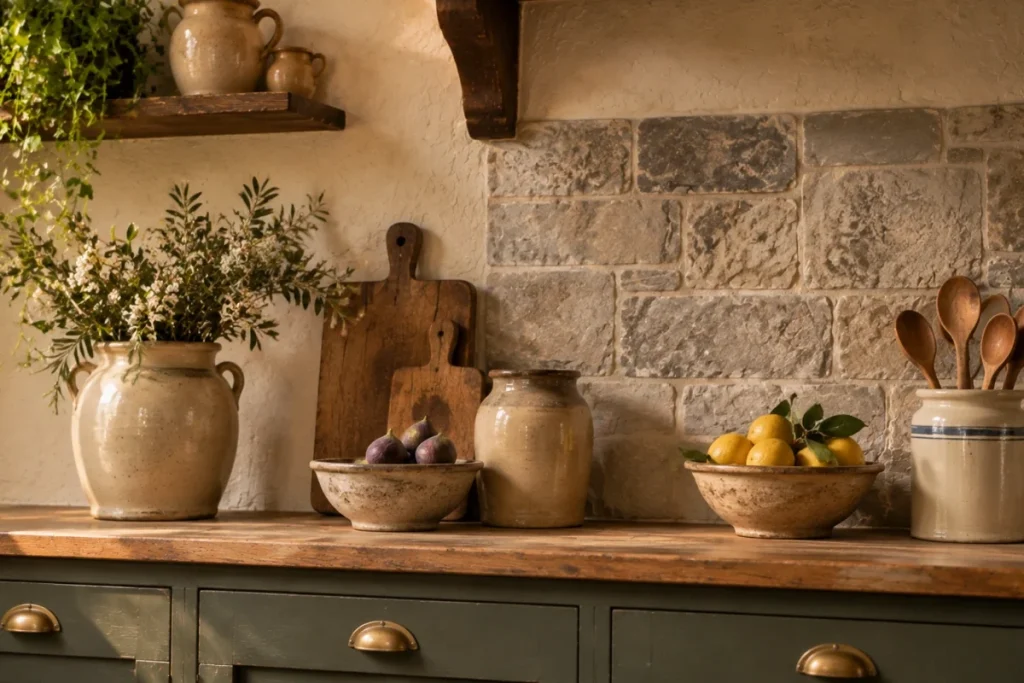
The beauty of this kitchen wall comes from its uneven texture: warm grey stone sits beside aged-looking plaster and simple timber worktops. Together, these materials create the impression of a house that has evolved slowly. For a renovation, you can use real stone, stone veneer or a textured tile depending on the budget and the wall construction. The most important practical detail is cleanability. Behind a hob or sink, choose a surface and sealant appropriate for moisture, grease and heat, and follow the manufacturer’s maintenance guidance. Keep the grout and surrounding paint in warm, earthy tones so the wall doesn’t look too crisp. Simple wooden boards and stoneware are all the styling a richly textured backsplash needs.
Candlelit Details for a Romantic Cottage Atmosphere
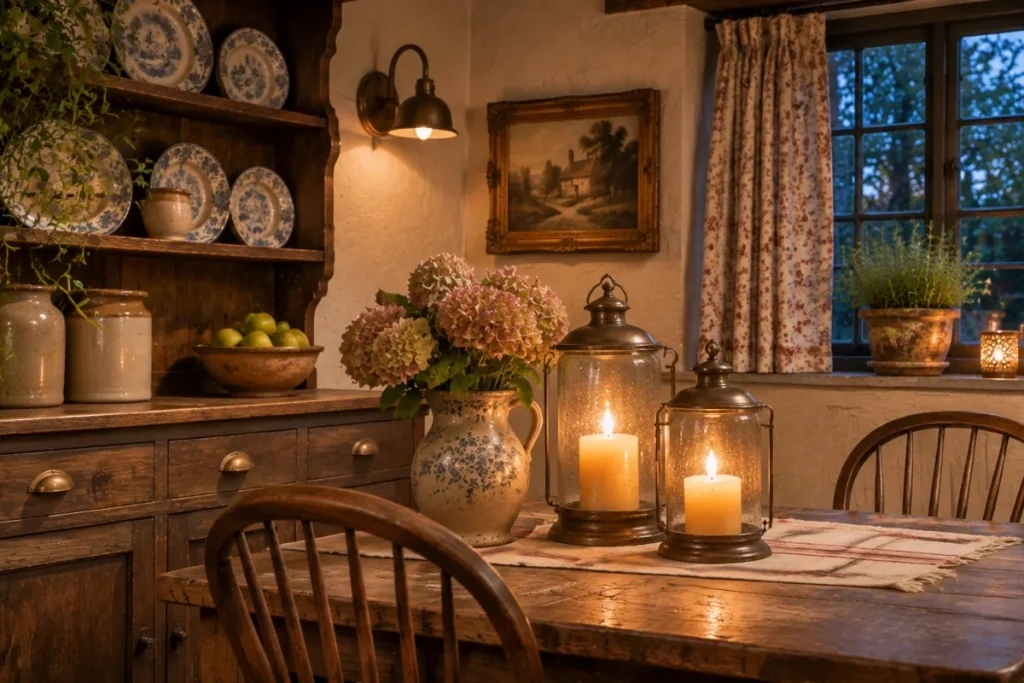
A cottage kitchen should feel as welcoming in the evening as it does at breakfast. This scene layers warm lamps, vintage pottery, dark wood and glowing lanterns to create a gentle, romantic atmosphere. You can capture the look without using real flames: good-quality LED candles inside lanterns give a similar flicker and are a safer choice around curtains, flowers and wooden shelves. Place one or two lanterns on a sideboard or dining table rather than filling every counter. A warm pendant above the table and a low-level wall lamp help complete the effect while leaving task lighting available for cooking. The secret is contrast—pools of soft light against deeper corners—not making the whole room dark.
How to Make a Moody Cottage Kitchen Feel Inviting
A darker palette does not have to mean a gloomy room. Keep one or two lighter surfaces, mix in natural wood, use warm but functional lighting, and leave clear worktop space for everyday cooking. If you rent, start with movable pieces such as a second-hand dresser, washable curtains or pottery bowls.
Frequently Asked Questions
What colours work best in a moody English cottage kitchen?
Deep olive, moss green, charcoal, oxblood burgundy and dark oak suit the look. Balance them with warm cream, stone and natural wood.
Can I create this style in a small kitchen?
Yes. Keep walls light, introduce one deeper cabinet colour, and choose compact pieces such as a narrow dresser or a small round table.
Do I need antique cabinets?
No. Shaker cabinetry, aged-look hardware, second-hand furniture and handmade-style ceramics can create the feeling.
What is the easiest budget-friendly update?
Try new cabinet handles, a washable floral curtain, a few stoneware pieces or warmer accent lighting.
How can I keep dark cabinets from making the room gloomy?
Use layered lighting, lighter walls and countertops, and test paint samples in the actual room.
Final Thoughts
The most memorable cottage kitchens are comfortable places to live, not perfect showrooms. Choose details you love and let the room develop its own character. For more deep-green inspiration, see our 17 Dark Cottagecore Kitchen Ideas. For practical kitchen-planning guidance, explore the National Kitchen & Bath Association. Above all, aim for a space that makes you want to put the kettle on and stay awhile.